
Strengthening Bonds Through Professional Guidance
Keeping a marriage strong takes work, but couples therapy can help. Many couples wait too long to seek help, thinking therapy is only for serious problems. The truth is, couples therapy can benefit relationships at any stage.
It gives you tools to improve communication, resolve conflicts, and deepen your connection.

Marriage counselling teaches key skills for a healthy relationship. You’ll learn to listen better, express feelings clearly, and work as a team. A therapist can help you tackle issues before they become big problems. They may use methods like the Gottman method or emotionally focused therapy to strengthen your bond.
Even happy couples can gain from therapy. It’s a chance to check in and grow together. You might try couples exercises at home between sessions. Simple acts like unplugging from technology to talk can make a big difference. With the right tools, you can build a stronger, more satisfying marriage.
Fundamentals of Couples Therapy
Couples therapy from Great Lakes Counselling in Simcoe, Ontario helps partners work through relationship issues and improve communication. It uses proven methods to build stronger connections and resolve conflicts.
Understanding Couples Therapy
Couples therapy aims to improve romantic relationships and resolve conflicts. It involves both partners meeting with a therapist to discuss problems and find solutions.
Therapy can address many issues like:
- Poor communication
- Lack of intimacy
- Trust issues
- Infidelity
- Financial disagreements
You’ll learn skills to express feelings, listen actively, and solve problems together. The goal is to increase understanding and build a healthier relationship.
Therapy usually occurs weekly for several months. Success depends on both partners being committed to the process and practicing new skills at home.
Different Approaches to Therapy
Therapists use various methods to help couples. Some common approaches include:
Emotionally Focused Therapy (EFT): This helps partners understand emotional patterns and create stronger bonds. It’s shown to be 75% effective.
Gottman Method: Based on extensive research, it teaches skills to manage conflict and increase friendship.
Cognitive Behavioral Therapy (CBT): This focuses on changing negative thought patterns and behaviuors that hurt the relationship.
Imago Relationship Therapy: It connects childhood experiences to adult behaviour in relationships.
Your therapist may use one approach or combine several based on your needs.
The Role of a Couples Therapist
A couples therapist acts as a neutral third party to guide discussions and teach relationship skills.
Key responsibilities include:
- Creating a safe space for open communication
- Helping identify harmful patterns
- Teaching conflict resolution techniques
- Guiding partners to understand each other’s needs
- Assigning “homework” to practice new skills
A good therapist remains impartial and doesn’t take sides. They help you see issues from new perspectives and find your own solutions.
Look for a licensed professional with specific training in couples therapy. Experience and a style you both feel comfortable with are important factors in choosing a therapist.
Communication and Conflict Resolution

Good communication and conflict resolution skills are key to a healthy marriage. Learning these skills can help you and your partner navigate disagreements and build a stronger relationship.
Enhancing Communication Skills
Active listening is crucial for better communication. When your partner speaks, give them your full attention. Put away distractions like phones. Make eye contact and nod to show you’re engaged.
Use “I” statements to express your feelings without blame. For example, say “I feel hurt when…” instead of “You always…”. This approach reduces defensiveness.
Practice empathy by trying to understand your partner’s perspective. Reflect back what you hear to ensure you’ve understood correctly.
Be aware of non-verbal cues. Your body language and tone of voice can convey as much as your words.
Addressing Common Conflicts
Financial disagreements often cause tension in marriages. Create a budget together and discuss financial goals regularly.
Parenting conflicts can arise from different upbringings. Agree on consistent rules and discipline methods for your children.
Trust issues may stem from past experiences or infidelity. Rebuilding trust takes time and effort from both partners.
Work-life balance struggles can strain relationships. Set boundaries between work and home life. Make quality time for each other a priority.
Intimacy problems are common but often hard to discuss. Be open about your needs and concerns with your partner.
Developing Conflict Resolution Skills
Learn to recognize when emotions are escalating. Take a break if needed to calm down before continuing the discussion.
Use a problem-solving approach:
- Define the problem clearly
- Brainstorm possible solutions together
- Evaluate each option
- Choose a solution to try
- Follow up to see if it’s working
Avoid criticism, defensiveness, and contempt. These behaviors can be toxic to relationships.
Practice compromising. Look for solutions where both partners feel heard and respected.
Consider using “I feel… When you… I need…” statements to express concerns constructively.
Strengthening the Relationship

Couples therapy offers powerful tools to build a stronger, more fulfilling partnership. By focusing on key areas, you can deepen your connection and overcome challenges together.
Building Emotional Intimacy
Emotional intimacy is the foundation of a strong marriage. In couples therapy, you’ll learn to share your feelings more openly and listen without judgment. This builds a deeper emotional connection.
Try these exercises to increase intimacy:
- Daily check-ins: Share your highs and lows
- Gratitude practice: Express appreciation for each other
- Active listening: Repeat back what you hear to ensure understanding
These simple habits can lead to significant improvements in your relationship dynamics.
Restoring Trust and Empathy
Trust is crucial for a healthy partnership. If trust has been broken, couples therapy can help you rebuild it. You’ll learn to:
- Communicate honestly about your needs and fears
- Show consistency in your words and actions
- Practice forgiveness and let go of past hurts
Empathy plays a key role in rebuilding trust. By putting yourself in your partner’s shoes, you can better understand their perspective and feelings.
Coping with External Stressors
External factors like work stress, health issues, or substance abuse can strain even the strongest relationships. In therapy, you’ll develop strategies to:
- Identify common stressors affecting your marriage
- Create a united front against challenges
- Support each other during difficult times
Learning to face problems as a team strengthens your bond. You might create a stress-reduction plan together or set boundaries to protect your relationship from outside pressures.
Remember, seeking help is a sign of strength. Couples therapy can provide you with the tools to build a more resilient and satisfying partnership.
Practical Considerations in Couples Therapy

Choosing the right approach to couples therapy involves several key factors. You’ll need to think about what format works best, understand the financial aspects, and consider specialized options that fit your situation.
Deciding on the Mode of Therapy
Couples therapy comes in different forms. You can choose between online and in-person sessions. Online therapy offers flexibility and convenience. You can attend from home, saving time and travel costs.
In-person sessions provide a more personal touch. You’ll be in the same room as your therapist and partner. This can help with non-verbal communication and creating a focused environment.
Think about your schedule and comfort level. If you have a busy life, online therapy might be easier. For those who prefer face-to-face interaction, in-person sessions could be better.
Understanding the Costs
Therapy is an investment in your relationship. Costs can vary widely based on several factors. These include the therapist’s experience, session length, and location.
On average, you might pay $100 to $250 per session. Some therapists offer sliding scale fees based on income. Check if your insurance covers couples therapy. Many plans do, but coverage can be limited.
Consider the long-term benefits when looking at costs. Effective therapy can prevent future relationship problems. This could save you money and stress down the line.
Exploring Premarital and Specialized Therapy
Premarital counselling can set a strong foundation for your marriage. It helps you discuss important topics before tying the knot. You’ll learn communication skills and set shared goals.
Specialized therapy addresses specific issues. For example, if addiction is affecting your relationship, you might need a therapist with expertise in that area. Discernment counselling is an option if you’re unsure about staying together.
These targeted approaches can be more effective for certain situations. They provide tools tailored to your unique challenges. Don’t hesitate to ask potential therapists about their specialized training and experience.
Frequently Asked Questions
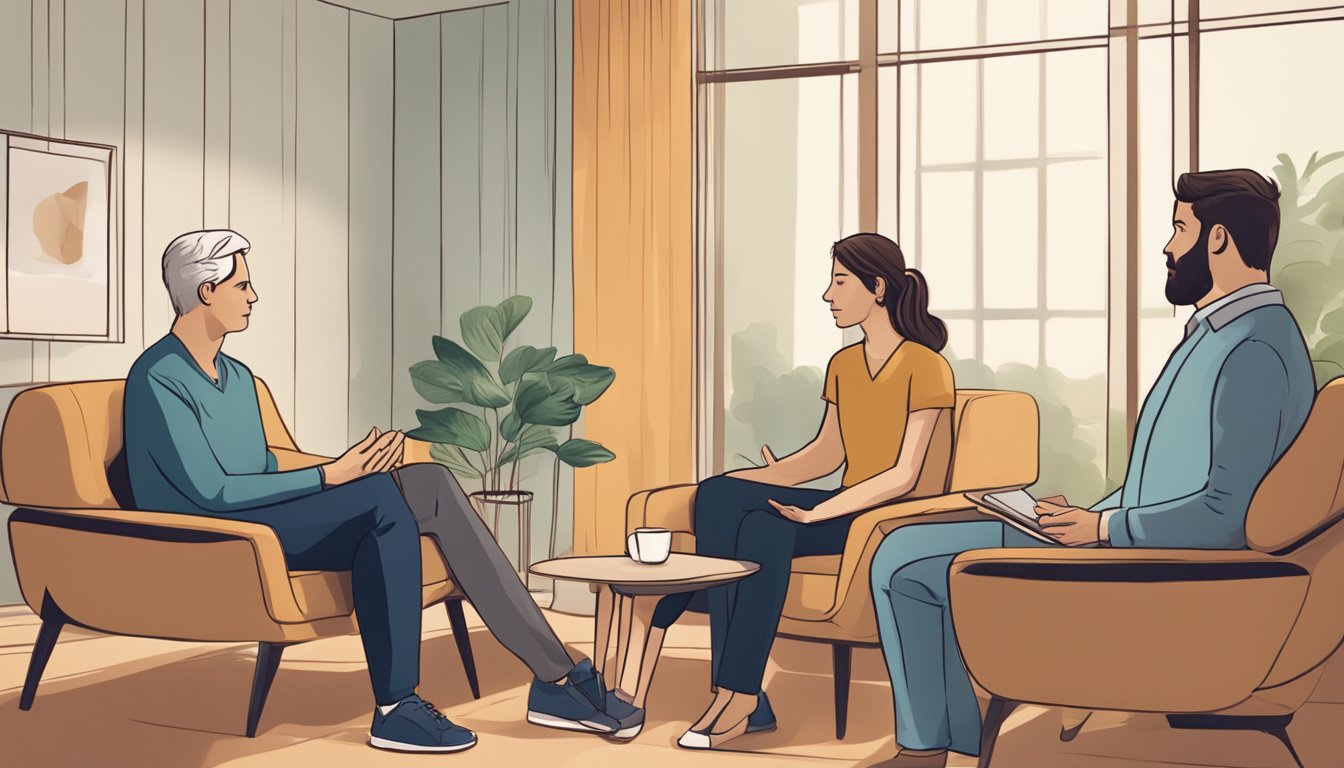
Couples therapy can help with many relationship issues. It’s a useful tool for both struggling and healthy couples. Here are some common questions about couples therapy.
What are the signs that a couple might benefit from couples therapy?
You might want to try couples therapy if you have frequent arguments. Communication problems are another sign. If you feel disconnected or unhappy in your relationship, therapy can help.
Lack of intimacy or trust issues are also reasons to seek help. Improved communication and conflict resolution are key benefits of therapy.
How effective is couples therapy in dealing with infidelity?
Couples therapy can be very helpful after infidelity. It gives you a safe space to talk about hurt feelings. You can learn to rebuild trust and heal your relationship.
Therapy helps you understand why the affair happened. You’ll work on forgiveness and moving forward together. Many couples find new strength in their relationship after therapy.
What are the main differences between couples therapy and marriage counseling?
Couples therapy and marriage counselling are very similar. Both focus on improving your relationship. The main difference is who can use these services.
Couples therapy is for any romantic partnership. Marriage counselling is just for married couples. Both use similar techniques to help you work through problems.
Can couples therapy have potential drawbacks, and what are they?
Couples therapy can be emotionally challenging. It might bring up painful topics. You might feel worse before you feel better.
It takes time and effort. You need to be open to change. If one partner isn’t committed, it may not work well. Therapy can also be expensive if not covered by insurance.
How often do couples stay together after undergoing couples therapy?
Many couples stay together after therapy. Research shows that couples therapy can be very effective. About 70% of couples report improvement in their relationship.
The success rate depends on many factors. Your willingness to change and work together matters a lot. Starting therapy early in your struggles can improve your chances.
Is it common for psychologically healthy couples to seek couples therapy, and why?
Yes, healthy couples often seek therapy. They use it to strengthen their bond. It’s like a check-up for your relationship.
You can learn new communication skills. Therapy helps you understand each other better. It can improve intimacy and connection. Many couples use therapy to prepare for big life changes, like having kids or retiring.