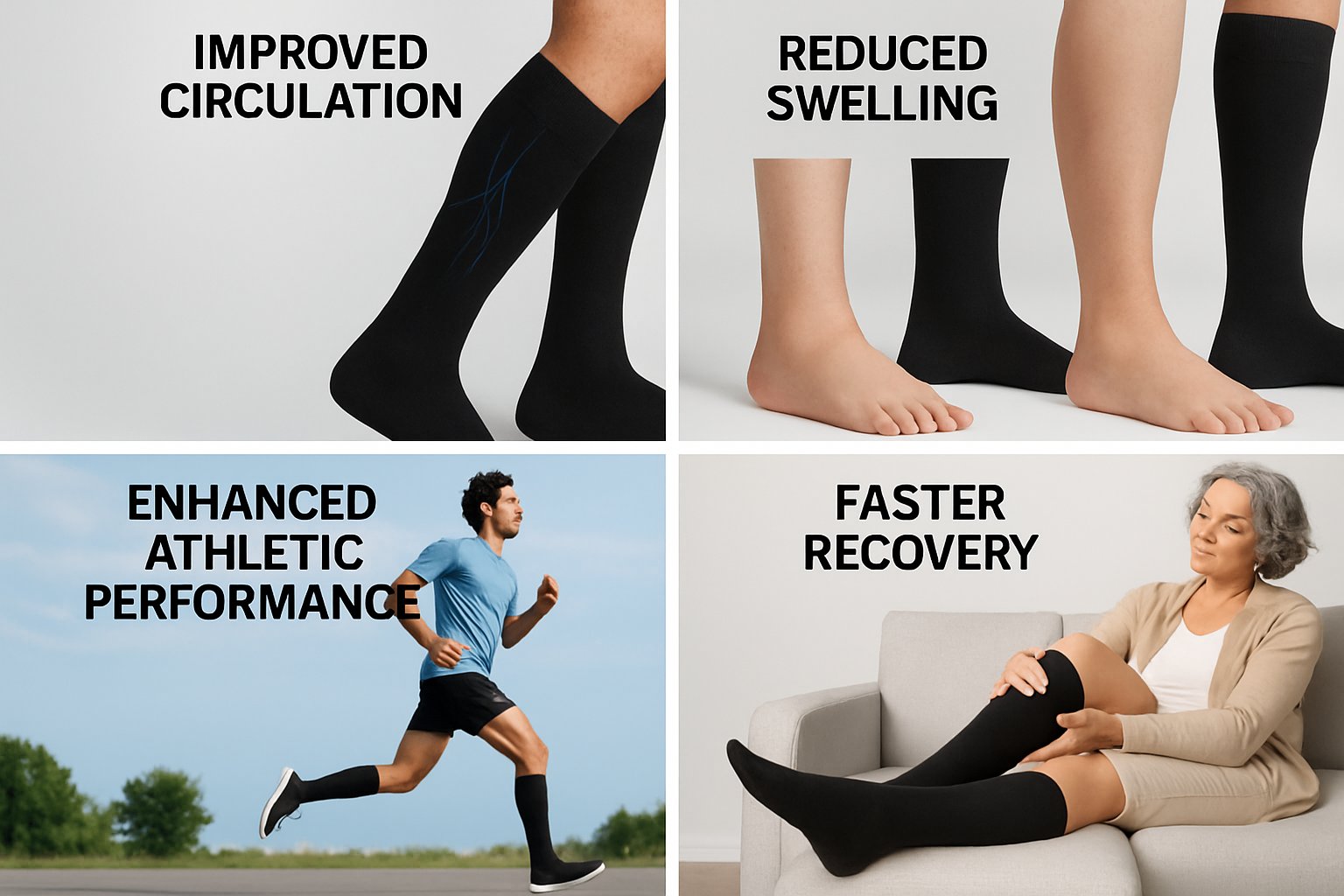
4 Benefits of Compression Socks
How They Improve Circulation and Reduce Swelling
Compression socks are a type of clothing designed to apply gentle pressure to your legs and feet. They are often recommended by health professionals for people with certain health needs, those who stand for long periods, or those who want to support their leg comfort and wellness.
Wearing compression socks can offer several important benefits for your daily health and comfort. If you are curious about how these socks might help you, understanding their main uses can help you decide if they fit your lifestyle.
1) Improve blood circulation by gently squeezing the legs to push blood toward the heart
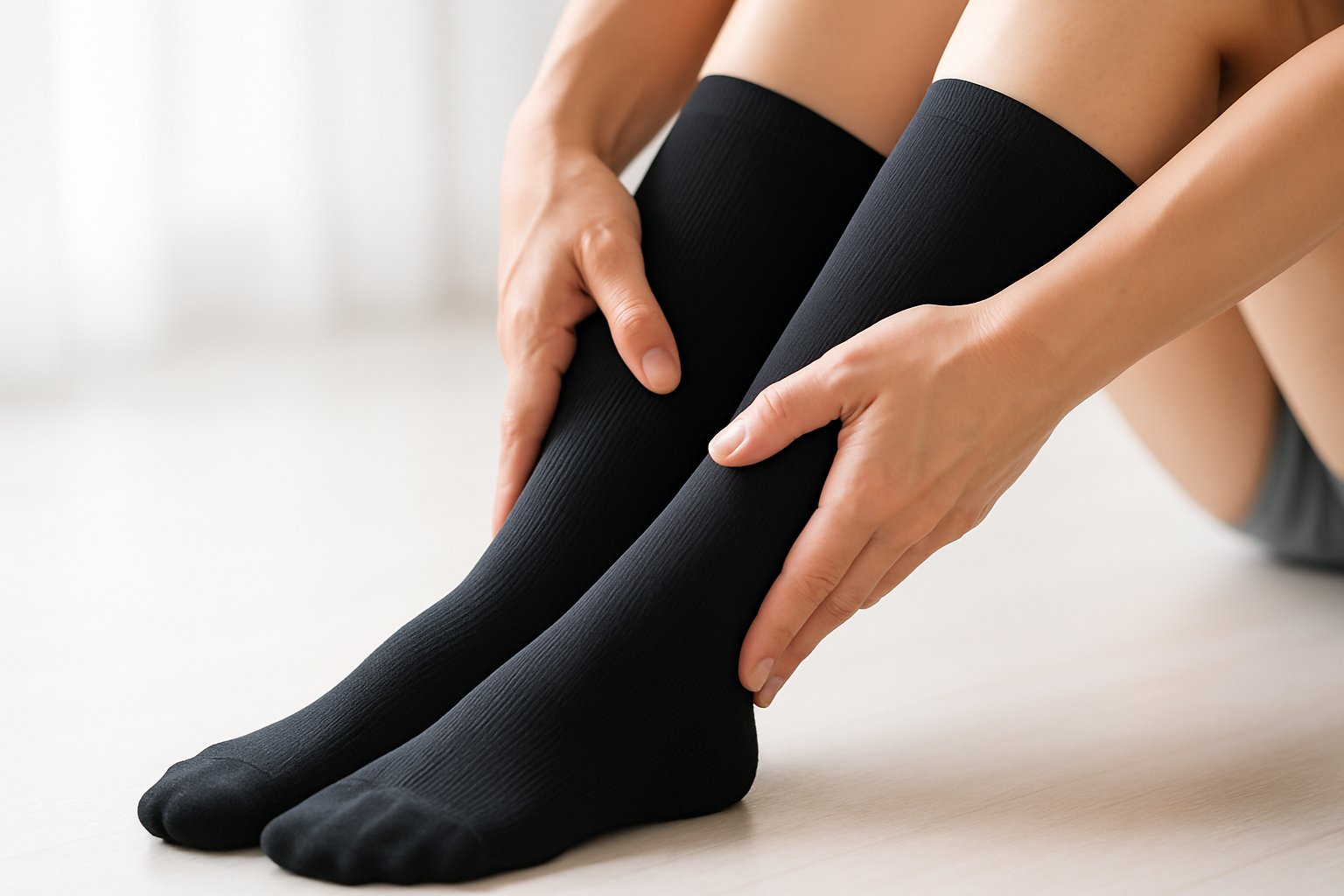
Compression socks work by gently squeezing your legs. This pressure helps your veins push blood back up to your heart.
Good blood circulation is important for your health. When blood flows well, it brings oxygen and nutrients to your muscles and organs.
If you sit or stand for long periods, blood can pool in your lower legs. Compression socks reduce this pooling by encouraging blood to move upward.
The pressure from compression socks is usually greatest at your ankles and less at your calves. This design, called graduated compression, makes it easier for your veins to do their job. This can help lower your risk for blood clots, especially if you travel or spend a lot of time sitting.
Wearing compression socks can also help reduce swelling in your feet and legs. You can read more about how compression socks support blood flow and vein health at WebMD and Verywell Health.
2) Reduce leg swelling caused by prolonged standing, travel, or medical conditions
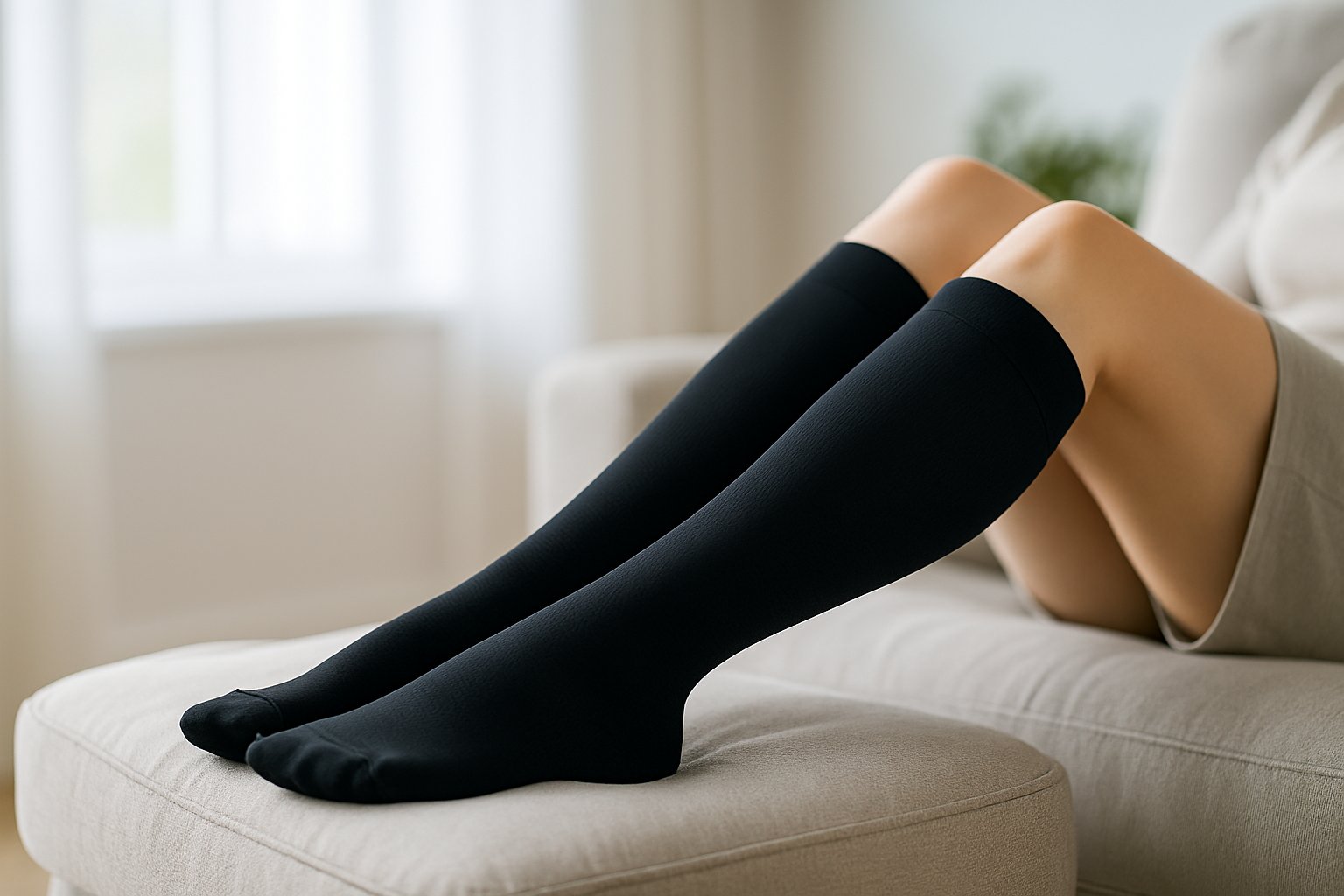
Wearing compression socks can help reduce swelling in your legs, ankles, and feet. This swelling, also called edema, often happens when you stand or sit for long periods, travel for many hours, or have certain medical conditions.
The gentle pressure from compression socks helps move blood and fluid back up your legs. This action prevents fluid from building up in your lower limbs, which can cause heaviness, tightness, or soreness.
People who wear compression socks often feel relief from discomfort caused by swelling. These socks are especially useful if you spend a lot of time on your feet, are pregnant, or experience swelling due to health problems.
Studies show that compression therapy can help improve blood circulation and control swelling related to prolonged sitting or standing. Using compression socks may also lower your risk for varicose veins and related leg issues.
If you notice frequent or severe swelling, talk to your doctor. Medical advice is important to find the best treatment for your needs.
3) Prevent blood clots, especially during long flights or for those at risk of deep vein thrombosis
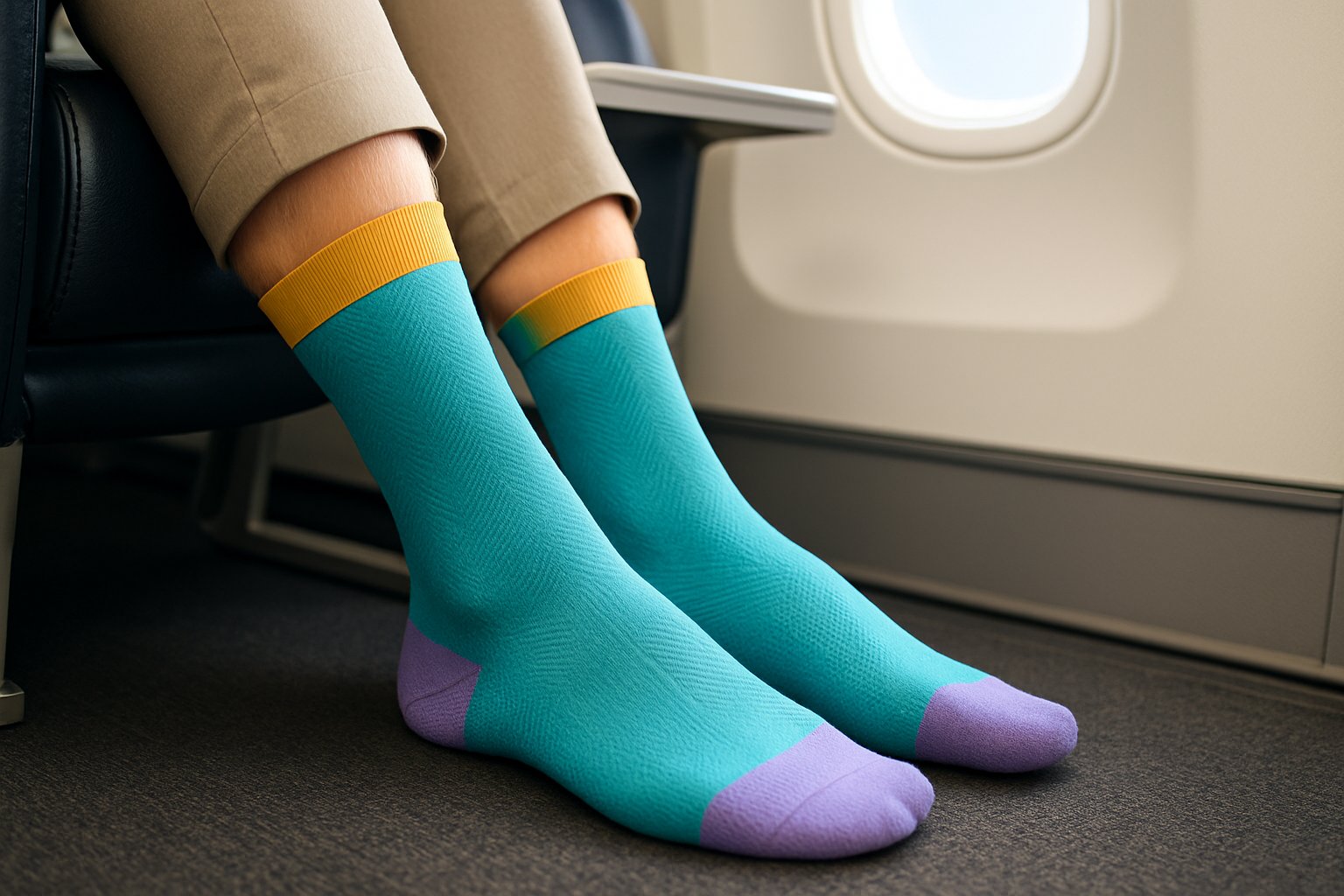
Wearing compression socks helps keep your blood flowing well, especially during long periods of sitting, like on flights. When you sit still for over four hours, your chance of developing a blood clot in your leg—called deep vein thrombosis (DVT)—goes up.
Compression socks gently squeeze your legs, which supports healthy circulation. This pressure helps move blood from your legs back to your heart and reduces the risk that blood will pool and form a clot.
Travel and long periods of sitting are well-known risk factors for blood clots. For example, you are more likely to experience DVT during flights lasting more than four hours or when you are immobile for a long time. Research suggests that about 1 in 4,500 airline passengers may develop a blood clot during a flight.
People who already have higher risks, such as those with certain health conditions, benefit even more from using compression socks. They provide a simple, safe way to lower your chances of DVT and prevent blood clots while flying.
4) Alleviate leg pain and fatigue by supporting veins and reducing pressure buildup
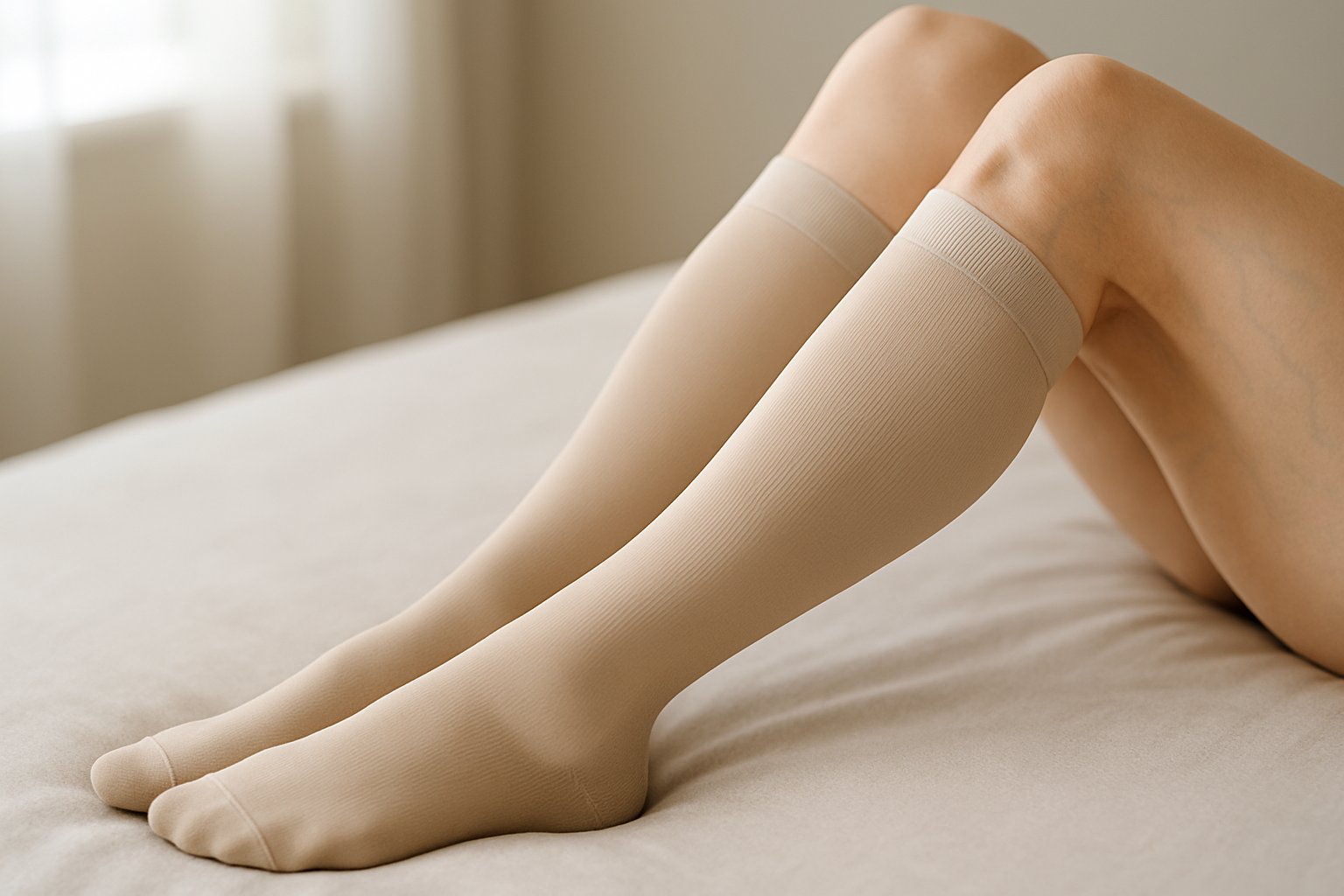
Compression socks help ease leg pain and tiredness by gently squeezing your legs. This action supports your veins and helps push blood back up toward your heart. As a result, blood does not pool as much in your lower legs, which can reduce swelling and aching.
When you stand or sit for long periods, you might notice your legs feel heavy or sore. Wearing compression socks can help stop this by improving circulation and lowering the pressure that builds up in your veins. People with jobs that require standing all day, such as nurses or retail workers, often find relief from leg fatigue with regular use.
Studies show that compression socks can also lower discomfort for people with leg conditions such as varicose veins or those at risk for blood clots. By keeping blood moving, these socks may help prevent the pain and swelling that can come from these issues. For many, adding compression socks to their daily routine can provide a simple way to manage leg pain and tiredness, especially after long hours of activity or travel. Learn more about how compression socks improve circulation and reduce leg pain.
How Compression Socks Work

Compression socks apply pressure to your lower legs and ankles to help improve blood flow, reduce swelling, and provide support. They gently squeeze your limbs, which can help prevent blood clots and ease discomfort from standing or sitting for long periods.
Graduated vs. Uniform Compression
Compression socks come in two main types: graduated and uniform. Graduated compression is tighter at the ankle and gradually gets looser as it goes up the leg. This helps push blood back up toward your heart, which may prevent blood from pooling in your lower legs. Uniform compression, on the other hand, provides the same level of pressure along the whole sock.
Graduated compression is most often recommended for people who have health conditions that affect blood flow, like varicose veins or swelling due to standing for long hours. Athletes and travelers sometimes wear graduated compression for added support and to lower their risk of blood clots on long flights. Research shows graduated styles are often more effective for circulation and swelling issues because they target the trouble areas directly. You can read more about how these socks promote better circulation at Verywell Health.
Materials and Design Features
Compression socks are made from stretchy, elastic materials like nylon, spandex, or a blend. The main goal is to provide even pressure without being uncomfortable or too tight. Some socks use moisture-wicking fabrics to help keep your skin dry and reduce odor. Certain designs also have reinforced toes or heels for extra comfort and durability.
A good pair should fit snugly but not cut off your circulation. Most options come in different lengths, such as ankle, calf, or thigh-high, so you can choose what works best for your activity or health needs. Many socks also have seamless toes or graduated compression zones to ensure better fit and comfort. Proper fit and the right materials can help you wear the socks longer without irritation. For a list of features and benefits, you can check Healthline.
Considerations for Daily Use
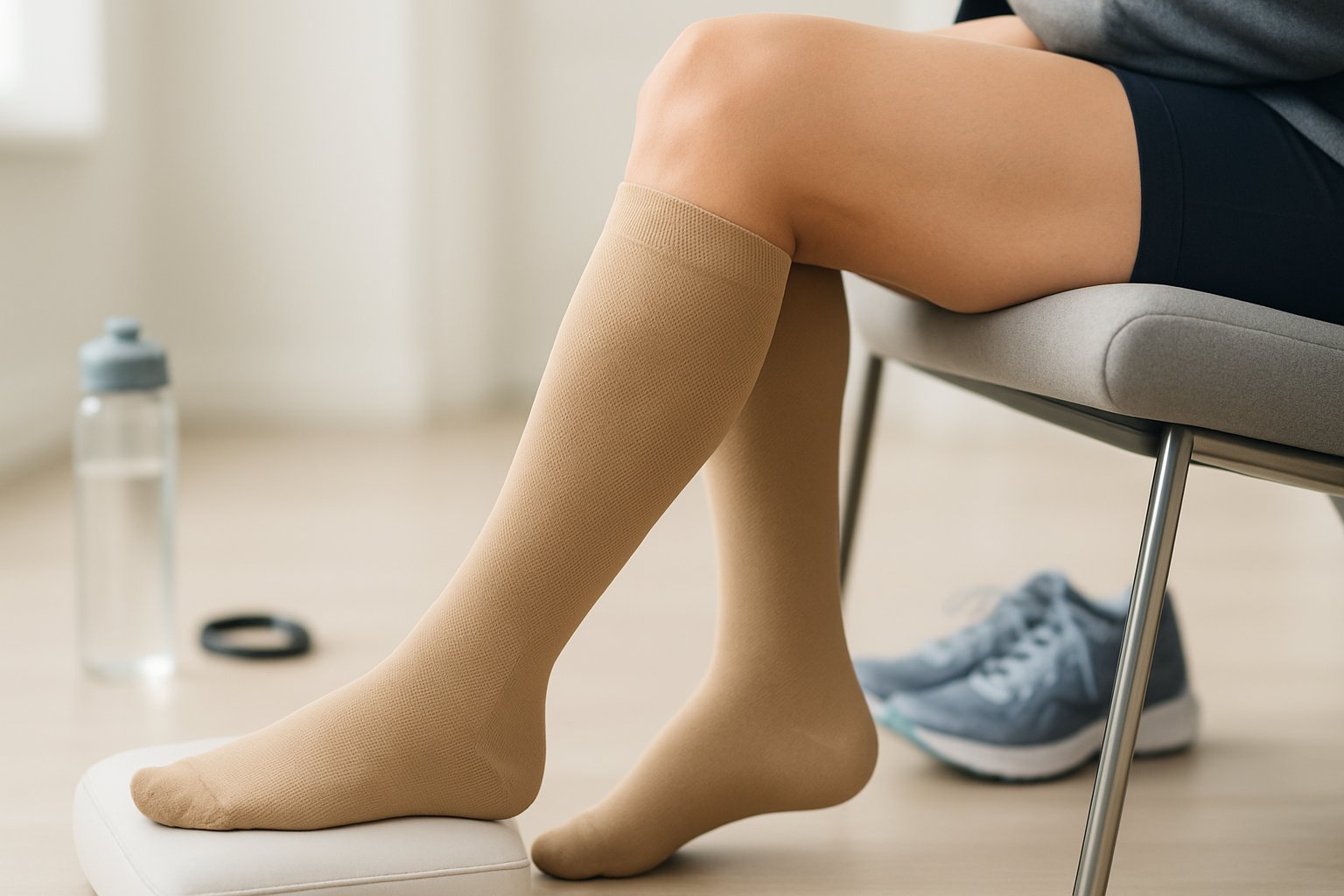
Wearing compression socks daily can bring several benefits, but it’s important to consider proper sizing and potential risks. Paying attention to fit and being aware of who should not use them will help you get the most out of your compression socks.
Selecting the Right Size and Fit
Choosing the correct size is essential for both comfort and effectiveness. Socks that are too tight may cause numbness, tingling, or discomfort, while socks that are too loose may not deliver the needed pressure. To find your size, measure your ankle, calf, and sometimes thigh, depending on the length you choose.
Many brands provide sizing charts. Compare your measurements to these charts for the best fit. A good fit should feel snug but not painful. If you notice marks or indentations in your skin after wearing them, you may need to try a different size or compression level.
Here’s a basic way to check your fit:
| Feeling | Possible Issue | Solution |
|---|---|---|
| Too tight | Reduced circulation | Try a larger size |
| Too loose | Slip/roll down | Try a smaller size |
| Just right | Snug, not painful | Stick with this size |
Regularly recheck your measurements since your leg size may change with weight or swelling. You can learn more about proper sizing and benefits at this guide to compression socks.
Precautions and Contraindications
Compression socks are usually safe but are not for everyone. People with certain conditions, like severe peripheral artery disease or skin infections, should not use them unless advised by a doctor. If you have numbness, tingling, open wounds, or poor blood flow in your legs, talk to your healthcare provider before use.
Look out for these warning signs:
- Pain or increased discomfort
- Tingling or numbness
- Sores or skin color changes
- Swelling that worsens
Compression socks may worsen symptoms in people with advanced diabetes, blood clots, or problems with blood flow. You can find a detailed list of who should and should not use compression socks at this comprehensive resource on contraindications and precautions. Always consult with a healthcare professional if you’re unsure about using compression socks daily.
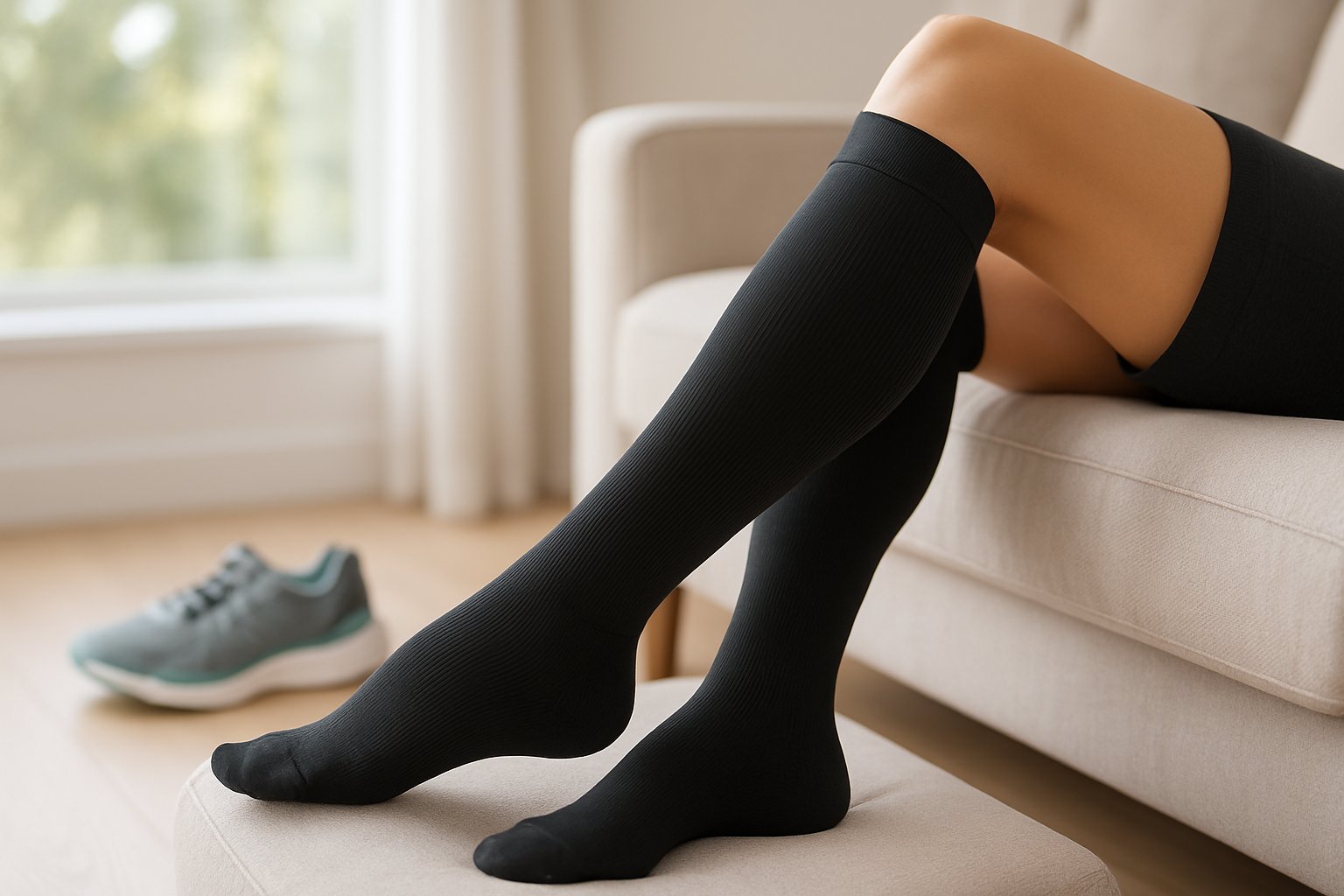
Compression socks can help reduce swelling, improve circulation, and lower the risk of blood clots. They may also lessen leg pain and support people with vein issues.